Terrific. It is not massive space but luckily we got a spot. Excellent spread of BBQ options, English language easy enough to solve, really quality food to bbq & attentive, friendly service. Really really perfectly tasty. Lived it. Had loads and extremely reasonably priced. Noise level can reach insane if a “well happy” group are upstairs in the partitioned low ceilinged timber lined booths but yeah, that can be the atmosphere. No worries there. Only negative is air quality. After 2 hours we were relieved to attain fresh air back out in the passage. Extraction would benefit from being uprated. It’s BBQ, so you would expect stuffiness & smoke but this must be difficult for employees. Top & recommended. Thanks.
Overview
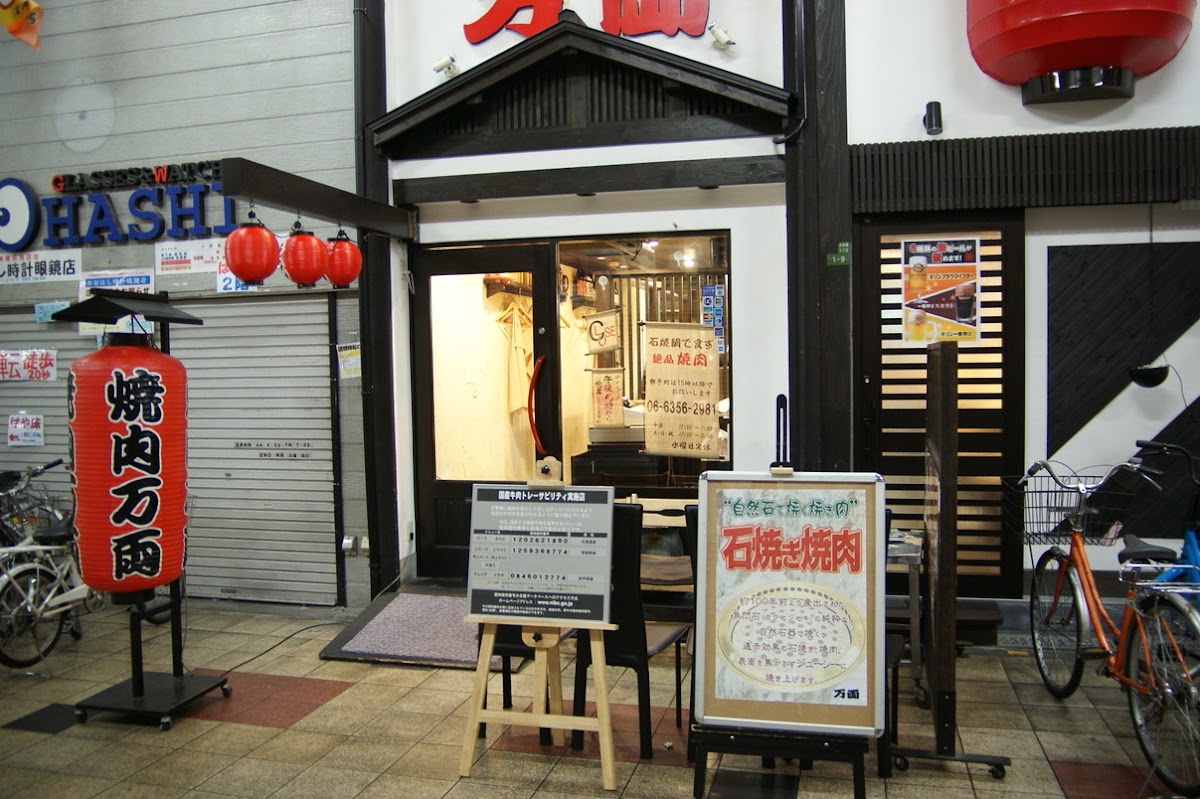
Tucked along 3 Chome-1-9 Tenjinbashi, Kita Ward, Osaka, 530-0041, Japan, Manryo Tenjinbashi is the kind of yakiniku spot you almost walk past-until the smell of charcoal-grilled beef pulls you right back in. I’ve eaten at plenty of barbecue restaurants across Osaka, but this one stands out for how seriously it takes its meat. From the moment I stepped inside, the staff moved with the calm confidence of people who know their product is exceptional.
The menu focuses on premium wagyu, and not just any wagyu. Japan’s beef grading system, overseen by the Japan Meat Grading Association, ranks meat based on yield and quality, with A5 representing the highest standard. Manryo Tenjinbashi regularly serves A4 and A5 cuts, and you can taste the difference immediately. The marbling is fine and evenly distributed, which means the fat melts at a lower temperature. When you place a slice on the grill, it sizzles lightly, curls at the edges, and within seconds it’s ready. The texture? Buttery. The flavor? Deep, slightly sweet, and clean.
On my first visit, I ordered a mixed platter to understand their range. The harami (skirt steak) had a firmer bite, while the ribeye practically dissolved. The staff suggested grilling each slice for about 20-30 seconds per side to preserve the natural umami. That small instruction changed everything. Overcooking wagyu is easy, especially if you’re used to thicker Western-style steaks. Here, precision matters. It’s a simple process: light charcoal heat, quick sear, dip in tare sauce or a pinch of sea salt, and enjoy immediately. That attention to timing is part of what makes the experience memorable.
Beyond the beef, the menu includes classic yakiniku staples-kimchi, namul, cold noodles, and rice bowls. I noticed many locals pairing their meal with draft beer or highballs, which balance the richness of the meat. In fact, according to Japan’s National Tax Agency, beer remains one of the most popular alcoholic beverages consumed with grilled meats nationwide. Watching groups of friends laughing over shared platters made it clear this isn’t just dinner; it’s a social ritual.
What impressed me most was the sourcing transparency. Osaka is known for its food culture, often called Japan’s kitchen, and restaurants here compete fiercely on quality. Manryo Tenjinbashi displays information about its beef origins, often highlighting specific regions known for cattle farming. This aligns with broader industry standards promoted by the Ministry of Agriculture, Forestry and Fisheries, which emphasizes traceability and quality control in Japanese beef production. Knowing where your food comes from builds trust, and it shows they’re not cutting corners.
Service is efficient but not intrusive. Even during peak hours, the staff keeps grills clean and replaces them when necessary. That might seem minor, yet anyone familiar with yakiniku knows that burnt residue can alter flavor. By switching the grill plates regularly, they maintain a consistent taste profile throughout the meal. It’s a small operational detail, but it reflects experience and professionalism.
Reviews from both locals and travelers often mention the balance between price and quality. While it’s not the cheapest barbecue restaurant in Osaka, the value becomes obvious once you taste the product. Compared to other yakiniku locations around Tenjinbashi-suji Shopping Street, the meat quality here feels a notch higher. Still, reservations are recommended, especially on weekends, since seating is limited and the location is popular with regulars.
If there’s one limitation, it’s that English explanations can be minimal during busy times. However, the staff is patient, and picture menus help bridge the gap. Besides, the language of good food hardly needs translation.
By the time I finished my last slice of wagyu, I understood why so many diners return. It’s not flashy, and it doesn’t rely on gimmicks. Instead, it focuses on technique, sourcing, and respect for ingredients. In a city overflowing with dining options, that straightforward dedication is exactly what makes a place worth revisiting.
Good to know
Service options
✓ Dine-in ✓ Delivery ✓ TakeawayHighlights
✓ Great wine listPopular for
✓ Lunch ✓ DinnerAccessibility
✓ Wheelchair-accessible car park ✓ Wheelchair-accessible entrance ✓ Wheelchair-accessible seatingOfferings
✓ Alcohol ✓ Beer ✓ Spirits ✓ WineDining options
✓ Lunch ✓ Dinner ✓ Dessert ✓ Table serviceAmenities
✓ ToiletAtmosphere
✓ TrendyCrowd
✓ Groups ✓ TouristsPlanning
✓ Reservations required ✓ Dinner reservations recommended ✓ Accepts reservations ✓ Usually a waitPayments
✓ Credit cards ✓ PayPay ✓ Rakuten PayParking
✓ Paid parking lotPhotos
1 / 4
Location
Reviews
- No ratings yet 866 reviews
love the beef sashimi here, both the slices and yukke were very tender and fresh, nothing bloody. then the second best was the thick cut ox tongue (to be grilled! not to eat in raw!), again it's very tender and juicy. they've also got some ox organs but definitely not my cup of tea. all of the grill plate could be chosen from sauce based or salt based. personally i think the sauce is far too heavy which covered the freshness of the meat. i picked salt based most of the time. overall the beef quality here was very good. but i think they must work on the ventilation system. it's so choking and greasy inside the shop and made us feel really unpleasant. went back and washed all over the body with twice the amount of shampoo and shower gel!
Don’t be fooled by its average Japanese looking shop front. This restaurant is a hidden jewel of the city! The quality of beef it’s serving is beyond words can describe, and I basically repeated whatever I had in he first run. Draft beer in Japan can’t never go wrong and we even had the season special beer and sake to go with. My best meal in town this time around no doubt, and will definitely come back again as it’s officially on my pocket list now.
Really hidden gem here, was recommended by a Japanese friend and it was worth it, friendly services aside, the beef was too good to be true
This restaurant offers a great variety of high quality meat and other dishes. The staff is friendly and the service is good in general. The bbq plate however has room for improvement. I liked the charcoal bbq better at the other Manryo in Osaka. But that’s a matter of personal preference, I think. Nice restaurant and good food nonetheless!
Super popular and can be hard to get a reservation, and I can understand why. Excellent quality meat and reasonable prices. The lunch menu is quite cheap and you still get the same high quality meat, so I can't recommend this place enough.
Booked this restaurant as our 1st dinner of the Osaka trip. The staff was polite and the food was good with affordable price.